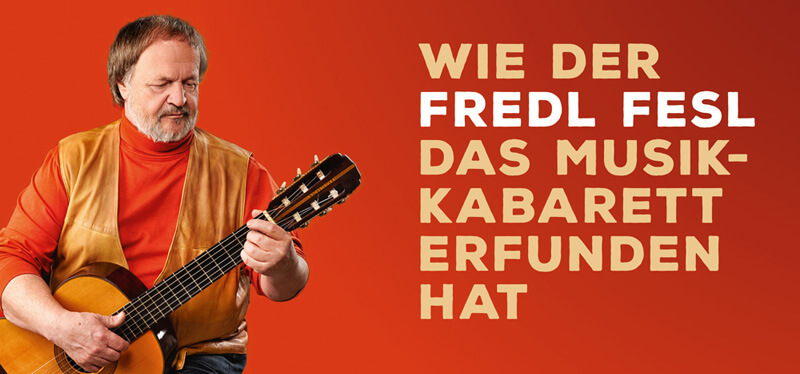
Fredl Fesl's Unconventional Journey: From Rebellious Youth to Kabarett Star
The world of Bavarian kabarett and folk music recently mourned the loss of one of its most unique and beloved figures, Fredl Fesl. Known for his whimsical humor, profound observations, and unforgettable dialect songs, Fesl carved out a distinctive niche in German entertainment. His artistic journey, however, was anything but conventional, marked by a rebellious spirit from a young age that ultimately forged the very essence of his comedic genius. Born on July 7, 1947, in the tranquil Bavarian Forest town of Grafenau, Fesl's early life foreshadowed the independent, often defiant, path he would later tread, transforming childhood challenges into the raw material for a stellar career.
The Formative Years: A Rebellious Spirit Uncaged
Even before formal schooling began, Fredl Fesl demonstrated an innate resistance to conformity. His brief two-day stint in kindergarten ended abruptly when staff concluded he was "completely unsuitable for this institution" due to "adaptation difficulties." Consequently, he enjoyed an unusually free childhood, spending the years before school unburdened by strict routines. This early experience planted the seeds of a profound individualism that would define his entire life and career. Upon entering primary school in Grafenau, similar issues arose, but this time, sending him home was not an option. This early pattern revealed a young boy who thrived outside conventional structures, an important insight for anyone looking to understand the roots of his unconventional artistry.
At the age of nine, Fredl's life took a significant turn when his parents relocated to Greding, Middle Franconia, to lease an inn. Despite the change of scenery and the hopes of his parents, Fredl remained a "difficult loner." Convinced that a strict boarding school might provide the necessary structure to guide his life in a positive direction, his parents enrolled him in the Oberrealschule Ingolstadt, with an accompanying student dormitory. This period, however, proved to be a clash of wills. The rigid schedules and regimented life at the boarding school grated on Fesl's independent nature. A letter from the boarding school to his parents presciently warned that he would face significant difficulties during military service if he didn't change his ways – a prediction that would later prove remarkably accurate. It was a testament to his unwavering character that external pressures rarely managed to bend his intrinsic spirit.
Early Musical Encounters and Frustrations
Amidst the strictures of boarding school, there was an attempt to introduce Fredl Fesl to formal music education. A dedicated music sergeant tried, in vain, to instill piano skills through drill. Yet, Fesl's stubbornness proved an insurmountable obstacle, mirroring his father's prior failed attempts to teach him the clarinet and accordion back in Greding. While all involved acknowledged his good musical ear, they unanimously noted his distinct lack of ambition for practicing. This seemingly frustrating period, however, provides a crucial clue to Fredl Fesl's eventual success: his music would not be born from classical discipline but from an inherent, untamed talent, later expressed through humor and natural improvisation. It illustrates that for some creative minds, traditional training can be counterproductive, with true genius emerging from a more organic, self-directed path.
Munich, Music, and Unexpected Sporting Success
In 1959, another significant move saw Fredl Fesl and his family settle in the vibrant metropolis of Munich, after his parents gave up the inn in Greding. The bustling big city left a profound impression on the young Fesl, though school continued to hold little allure. It was here that his father, undeterred by past failures, made a third attempt to introduce Fredl to an instrument ��� the trumpet. This time, something clicked. After a surprisingly short period, Fredl was producing "quite decent tones," accompanying his father twice a week to rehearsals with a brass band and even a salon orchestra. This fleeting engagement with structured music hinted at a latent talent that was merely waiting for the right moment and the right instrument to awaken.
However, Fredl's path soon veered in an entirely different direction. At the age of 15, through school friends, he discovered the ESV München Ost and joined their wrestling and weightlifting division. This new passion ignited a profound sense of athletic ambition, causing his musical pursuits and trumpet playing to recede into the background. His dedication to sports quickly yielded results, earning him numerous certificates and medals at championships and tournaments. A testament to his newfound focus, Fredl Fesl became the Upper Bavarian Junior Champion in Weightlifting in both 1966 and 1967. This intense period of physical achievement demonstrates Fredl Fesl's capacity for fierce dedication when genuinely captivated, showcasing a disciplined side rarely seen in his academic or early musical endeavors. It’s a powerful reminder that individuals often have hidden talents that only emerge when they find their true passions, whether in sports, arts, or other fields.
Military Service and the Birth of a Performer
Having finally grown "fed up with school," Fredl Fesl embarked on an apprenticeship as an art blacksmith. Upon completing his training, the time came for military service – a period that would ironically prove to be the crucible in which his performing talent was truly forged. True to the boarding school's earlier prophecy, his difficulties with superiors were even worse than predicted. Yet, among his comrades, Fesl was a source of constant amusement and camaraderie. He "always provided fun and laughter" through his witty interjections during instruction, intentionally off-key singing during marches, and entertaining performances of funny songs after duty hours. It was during these informal, often rebellious, performances for his fellow soldiers that Fredl Fesl truly learned his first songs and honed the comedic timing and unique stage presence that would later define his career. This period underscores a fascinating aspect of creativity: sometimes, the most restrictive environments can inadvertently foster the greatest originality, pushing individuals to find unconventional outlets for their expression. For aspiring artists, this serves as a valuable lesson: embrace every opportunity to perform, no matter how informal, as it can be a vital training ground.
The Kabarett Star Emerges and a Legacy Endures
After his military service, Fredl Fesl's natural inclination for humor and storytelling, refined during those impromptu barracks performances, blossomed into a full-fledged career. He transitioned from a military joker to a beloved kabarett artist, charming audiences with his "hintersinniger Humor" (subtle humor) and distinctive Bavarian dialect. His famous yodel parodies and hilariously crafted songs became instant classics, resonating with a broad audience over decades. Fesl had found his true calling, transforming his rebellious spirit and unique worldview into a celebrated art form. To understand the full scope of his impact, delve into Fredl Fesl Dies at 76: Remembering the Bavarian Humorist and explore The Legacy of Fredl Fesl: Battling Parkinson's, Creating Timeless Songs, which further detail his career and lasting influence.
However, Fesl's performing career was eventually curtailed by a long and arduous battle with Parkinson's disease, which he bravely fought for 25 years. In 2006, he was forced into an involuntary retirement from the stage he loved, choosing to live an idyllic life with his wife Monika on a secluded farm in Pleiskirchen, Upper Bavaria. His passing on Tuesday, just shy of his 77th birthday, was described by his wife Monika as "redemption" – a peaceful end to a life lived on his own terms, facing challenges with characteristic resilience. Fredl Fesl' leaves behind a rich tapestry of songs and performances that continue to entertain and inspire, a testament to a man who truly marched to the beat of his own drum.
Fredl Fesl's journey is a compelling narrative of how an unconventional spirit, once deemed difficult to adapt, can ultimately lead to a distinctive and celebrated career. From his earliest days in Grafenau to his final years battling illness, Fesl remained true to himself, transforming every challenge into a unique facet of his art. His life reminds us that genuine talent often thrives outside traditional boundaries, proving that rebellion, when channeled creatively, can indeed lead to an extraordinary legacy in the hearts of millions.